
calculator evolution guide
The Evolution of the Calculator: A Comprehensive Guide
From ancient abaci to modern apps‚ this guide explores the fascinating journey of calculation. It details the progression from mechanical devices
to electronic marvels‚ charting a course through pivotal innovations and technological leaps spanning millennia.
Early Calculating Tools: Before Electronics
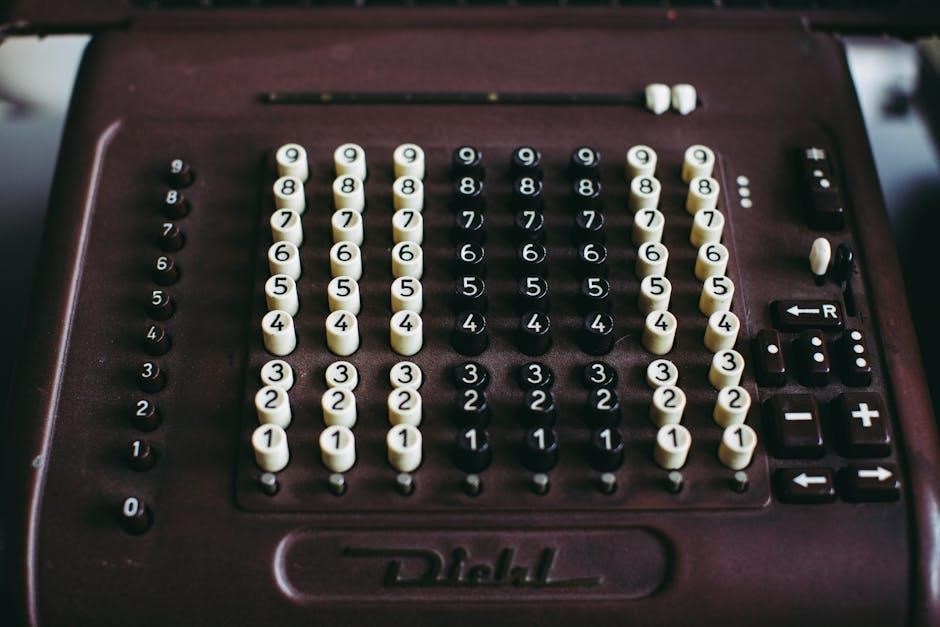
Long before the advent of transistors and integrated circuits‚ humanity relied on ingenious mechanical aids for computation. The earliest roots of calculating tools stretch back thousands of years‚ with evidence of systems developed by ancient civilizations to manage increasingly complex arithmetic needs. These weren’t calculators in the modern sense‚ but rather tools to assist calculation‚ making processes faster and less prone to error.
The abacus‚ originating in Mesopotamia and later refined in China and other regions‚ stands as a prime example. Utilizing beads strung on rods‚ it enabled users to perform addition‚ subtraction‚ multiplication‚ and division with remarkable efficiency. Simultaneously‚ ancient Egyptians and Mesopotamians employed different counting boards and systems‚ often tied to their respective numeral systems.
Even the Roman numeral system‚ while cumbersome for complex calculations‚ represented an early attempt at standardized numerical representation. However‚ concerns about accuracy and forgery hindered widespread adoption of the Hindu-Arabic numeral system for centuries‚ despite its superior efficiency. These pre-electronic tools demonstrate a persistent human drive to overcome the limitations of manual calculation‚ laying the groundwork for future innovations.
The Abacus: Origins and Functionality
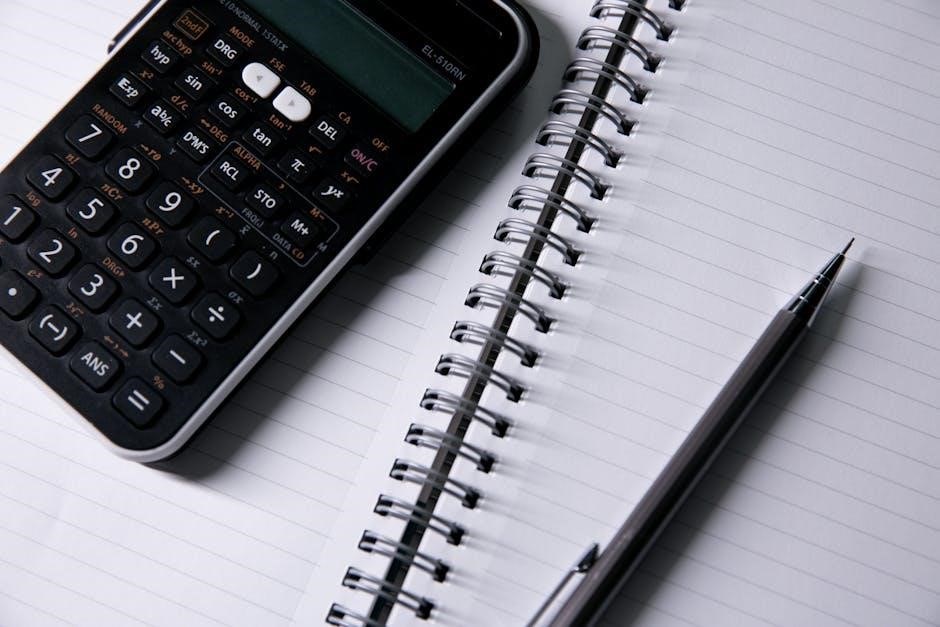
The abacus‚ arguably the most recognizable pre-modern calculating device‚ boasts a rich history tracing back to ancient Mesopotamia‚ around 2700-2300 BC. While its exact origins remain debated‚ the earliest forms involved lines drawn in sand with pebbles used for counting. Over time‚ these evolved into framed devices with beads or stones moved along rods or grooves.
The most familiar form‚ the suanpan from China‚ features a rectangular frame divided into two sections by a beam. Beads are arranged on rods‚ typically with two beads above the beam representing five and five beads below representing one. Skilled operators could perform complex calculations – addition‚ subtraction‚ multiplication‚ division‚ and even square root extraction – with impressive speed and accuracy.

The abacus isn’t merely a counting tool; it’s a representation of place value. By manipulating the beads‚ users effectively perform calculations using a base-ten system. Its enduring popularity‚ even in the face of electronic calculators‚ speaks to its effectiveness and the skill developed by its practitioners. It remains a valuable educational tool for understanding mathematical concepts.
Ancient Calculation Methods: Mesopotamia‚ Egypt‚ and China
Long before electronic devices‚ ancient civilizations developed ingenious methods for calculation. Mesopotamians‚ around 2000 BC‚ utilized a sexagesimal (base-60) numeral system‚ influencing our modern timekeeping. Their calculations‚ often involving land surveying and commerce‚ relied on clay tablets and stylus markings – a precursor to written arithmetic.

Ancient Egyptians employed a decimal system‚ but lacked a symbol for zero. Their calculations‚ documented on papyrus scrolls‚ involved repeated doubling and halving‚ a method surprisingly efficient for multiplication and division. This system‚ while functional‚ was more cumbersome than later developments.
China’s early calculating tools included the counting board‚ a precursor to the abacus‚ and sophisticated rod numeral systems. They excelled in practical mathematics‚ crucial for astronomy‚ engineering‚ and calendar creation. The Chinese also developed early forms of algebra and understood negative numbers centuries before Europe. These diverse approaches demonstrate a universal human need to quantify and solve problems.
The Slide Rule: A Mechanical Analog Computer
Emerging in the 17th century‚ the slide rule represented a significant leap in calculating technology. Based on John Napier’s logarithms‚ it allowed for rapid multiplication‚ division‚ roots‚ logarithms‚ and trigonometry – all mechanically. Unlike digital calculators‚ the slide rule operated as an analog computer‚ representing quantities as physical distances.
Consisting of sliding scales marked with logarithmic graduations‚ users aligned indicators to perform calculations. Skilled operators could achieve impressive speed and accuracy‚ making the slide rule indispensable for engineers‚ scientists‚ and navigators for over three centuries. Different scales accommodated various functions‚ expanding its versatility.
Despite its limitations – accuracy depended on the user’s skill and the rule’s construction – the slide rule remained dominant until the advent of affordable electronic calculators in the 1970s. It fostered a deep understanding of mathematical principles and served as a crucial tool during periods of rapid technological advancement‚ embodying a unique era of mechanical computation.
Mechanical Calculators: Pascaline and Leibniz Wheel
The 17th century witnessed the birth of mechanical calculation with Blaise Pascal’s Pascaline (1642) and Gottfried Wilhelm Leibniz’s stepped reckoner. Pascal‚ seeking to aid his tax collector father‚ designed a machine capable of addition and subtraction using geared wheels representing decimal digits. Though innovative‚ the Pascaline was expensive and complex to manufacture‚ limiting its widespread adoption.
Leibniz‚ building upon Pascal’s work‚ created a more versatile machine in 1673. His stepped reckoner could perform all four arithmetic operations – addition‚ subtraction‚ multiplication‚ and division – utilizing a stepped drum mechanism. This represented a significant advancement‚ though early versions suffered from reliability issues.
These early mechanical calculators‚ while groundbreaking‚ remained largely curiosities for centuries. Their intricate designs and high production costs hindered their practical application. Nevertheless‚ they laid the conceptual foundation for future automated calculation devices‚ demonstrating the feasibility of mechanizing arithmetic processes and inspiring subsequent inventors.
The 19th Century: Towards Automated Calculation
The 19th century saw incremental‚ yet crucial‚ steps towards fully automated calculation. While Pascal and Leibniz’s machines sparked initial interest‚ practical and commercially viable calculators remained elusive. Numerous inventors throughout the century dedicated themselves to refining mechanical designs‚ focusing on increased accuracy‚ reliability‚ and ease of use.
Significant improvements were made in gear mechanisms and manufacturing techniques‚ leading to more robust and efficient calculating machines. These devices‚ often large and complex‚ found limited application in scientific and engineering fields where precise calculations were paramount. However‚ they were still far from being commonplace tools.
This period also witnessed a growing awareness of the potential for automating complex calculations beyond simple arithmetic. The seeds of modern computing were being sown‚ with inventors beginning to explore the possibilities of programmable machines capable of performing a wider range of tasks. This set the stage for the revolutionary breakthroughs of the 20th century.
Charles Babbage and the Difference Engine
Charles Babbage‚ a British polymath‚ conceived of two groundbreaking machines in the 19th century: the Difference Engine and the Analytical Engine. The Difference Engine‚ designed in the 1820s‚ aimed to automate the calculation of polynomial functions‚ specifically for creating accurate logarithmic and astronomical tables. This was a response to the errors prevalent in hand-calculated tables.

Babbage’s design utilized a series of gears and wheels to perform addition and subtraction repeatedly‚ eliminating human error. Though he received government funding‚ the project faced significant engineering challenges and was never fully completed during his lifetime due to the limitations of manufacturing technology at the time.
However‚ a fully functional Difference Engine No. 2 was constructed in the late 20th century‚ proving the viability of Babbage’s original design. It stands as a testament to his visionary thinking and a pivotal moment in the history of automated calculation‚ foreshadowing the digital computers to come.
Ada Lovelace: The First Computer Programmer
Ada Lovelace‚ a British mathematician‚ is widely recognized as the first computer programmer‚ despite working decades before the advent of modern computers. She is best known for her notes on Charles Babbage’s Analytical Engine‚ a proposed mechanical general-purpose computer.
Lovelace’s notes‚ included with her translation of an article on the Analytical Engine‚ contained an algorithm intended to be processed by the machine – specifically‚ a method for calculating Bernoulli numbers. This is considered the first algorithm specifically tailored for implementation on a computer‚ making her a pioneer in the field.
Crucially‚ Lovelace understood the potential of the Analytical Engine beyond mere calculation‚ envisioning its capability to manipulate symbols and create complex outputs‚ including music. Her insights were remarkably prescient‚ anticipating the broader applications of computing far beyond numerical computation. She truly grasped the machine’s potential.
The Jacquard Loom: A Precursor to Computing
The Jacquard Loom‚ invented by Joseph Marie Jacquard in the early 19th century‚ represents a pivotal step towards automated computation‚ despite being a textile manufacturing device. It revolutionized the weaving process through the use of punched cards.
These cards contained patterns encoded as a series of holes‚ dictating which warp yarns were raised or lowered‚ thereby creating intricate designs in the fabric. The loom mechanically read these cards‚ automating a previously manual and highly skilled process. This system of using punched cards to control a machine’s operation is profoundly significant.
The Jacquard Loom’s innovation lay in its ability to store and retrieve information – the weaving patterns – in a reusable and programmable format. This concept directly influenced Charles Babbage’s designs for the Analytical Engine‚ as he intended to use similar punched cards for inputting instructions and data. It demonstrated the power of automated control through coded instructions‚ laying groundwork for future computing.
The Dawn of Electronic Calculators (1930s-1960s)
The period between the 1930s and 1960s marked a crucial transition from mechanical to electronic calculating devices‚ fueled by advancements in electronics during and after World War II. Early electronic calculators were largely experimental and often massive in size‚ utilizing vacuum tubes – bulky and energy-intensive components.
These early machines‚ while not practical for widespread use‚ demonstrated the potential of electronic circuits for performing complex calculations far faster than their mechanical predecessors. The need for rapid calculations during wartime‚ particularly for ballistics and codebreaking‚ spurred significant investment in this technology. However‚ these devices were often large‚ noisy‚ and unreliable.
The true breakthrough arrived in 1964 with Sharp’s introduction of the Compet CS-10A‚ the world’s first all-transistor desktop calculator. This marked a turning point‚ as transistors were smaller‚ more reliable‚ and consumed less power than vacuum tubes‚ paving the way for more compact and affordable calculators.

Early Digital Computers and Their Calculating Roots
The development of early digital computers was inextricably linked to the long history of calculating devices‚ building upon centuries of innovation in mechanical and electromechanical computation. While distinct from calculators in their broader capabilities‚ these computers shared a common ancestry in the pursuit of automated calculation.
Machines like the Harvard Mark I‚ completed in 1944‚ were essentially large-scale automatic calculators‚ capable of performing complex sequences of arithmetic operations. These early computers utilized electromechanical relays‚ representing a step towards fully electronic systems. The conceptual foundations for these machines can be traced back to earlier inventions like Charles Babbage’s Difference Engine.
Furthermore‚ the Jacquard loom‚ a precursor to computing from the early 19th century‚ demonstrated the principle of using punched cards to control a machine’s operations – a concept later adopted in early computers. The need for complex calculations during World War II accelerated the development of these machines‚ ultimately laying the groundwork for the modern digital age.
The First All-Transistor Calculator: Sharp CS-10A (1964)
1964 marked a pivotal moment in calculator history with the introduction of the Sharp CS-10A‚ widely recognized as the world’s first all-transistor desktop calculator. This groundbreaking device‚ initially named “Compet‚” represented a significant leap forward from the bulky‚ vacuum tube-based calculators that preceded it. Utilizing transistors dramatically reduced the calculator’s size‚ power consumption‚ and cost‚ making it more practical for wider use.
Prior to the CS-10A‚ calculators were often large‚ expensive‚ and unreliable. The transition to transistors enabled a more compact and efficient design‚ paving the way for the portable calculators that would soon follow. Sharp’s innovation wasn’t merely a technological advancement; it laid the foundation for the company’s future as a leading electronics manufacturer.
The CS-10A’s impact extended beyond its technical specifications. It signaled the beginning of a new era in personal computing‚ democratizing access to calculation tools and foreshadowing the calculator revolution of the 1970s.
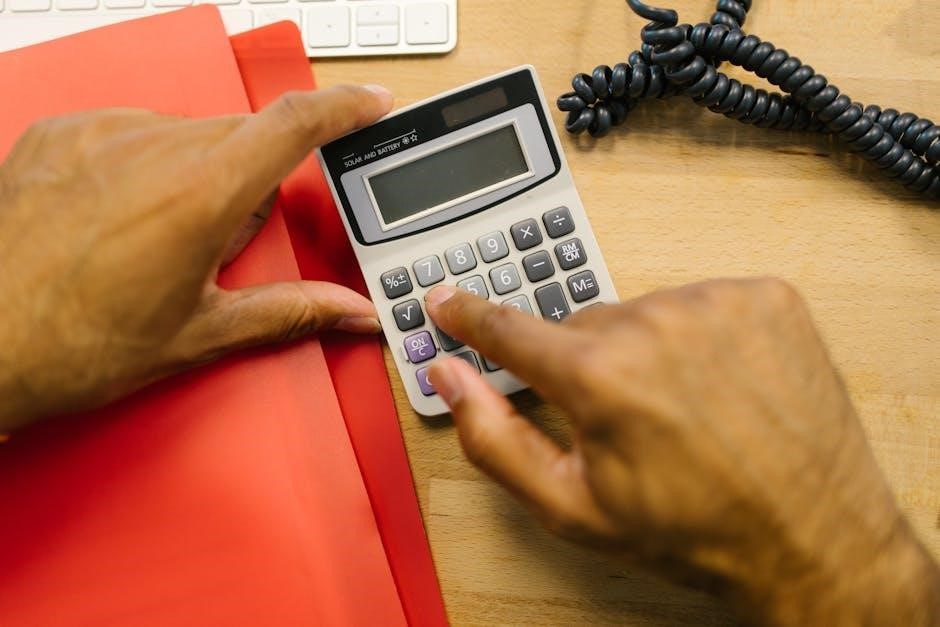
The Rise of Portable Calculators (1970s)
The 1970s witnessed an explosive growth in the popularity and accessibility of calculators‚ largely driven by the development of portable models. Building upon the transistor technology pioneered by the Sharp CS-10A‚ manufacturers like Texas Instruments spearheaded a revolution‚ dramatically reducing both the size and cost of these essential tools. This decade saw calculators transition from specialized devices for scientists and engineers to commonplace items for students‚ businesses‚ and everyday consumers.
Texas Instruments’ introduction of integrated circuits further fueled this trend‚ allowing for even more compact and affordable designs. The resulting price wars made calculators accessible to a much broader audience‚ fundamentally changing how calculations were performed in various fields. No longer confined to desktops‚ calculators became truly mobile‚ empowering individuals with on-the-go computational capabilities.
This period marked a turning point‚ establishing the calculator as an indispensable part of modern life and setting the stage for further innovation in functionality and design.
Texas Instruments and the Calculator Revolution
Texas Instruments (TI) played a pivotal role in democratizing calculator technology during the 1970s‚ fundamentally altering the landscape of computation. Leveraging their expertise in semiconductor technology‚ particularly integrated circuits‚ TI aggressively pursued the development and mass production of affordable‚ portable calculators. This strategic move initiated intense price competition‚ driving down costs and making calculators accessible to a vastly wider consumer base.
Their early models‚ while basic in functionality‚ represented a significant leap forward in portability and convenience compared to previous desktop devices. TI didn’t simply focus on affordability; they continually innovated‚ introducing increasingly sophisticated models with expanded features. This commitment to advancement solidified their position as a dominant force in the calculator market.
The company’s impact extended beyond simply manufacturing calculators; they spurred a revolution in how calculations were performed‚ impacting education‚ business‚ and scientific endeavors globally.
The 1980s and 1990s: Expanding Functionality
The decades of the 1980s and 1990s witnessed a dramatic expansion in calculator capabilities‚ moving beyond basic arithmetic to encompass a wider range of mathematical and scientific functions. This era saw the rise of specialized calculators tailored to specific needs‚ catering to students‚ engineers‚ and professionals alike. Scientific calculators became increasingly prevalent‚ incorporating trigonometric‚ logarithmic‚ and statistical functions‚ becoming essential tools for advanced coursework and research.
Programmable calculators‚ pioneered by companies like Hewlett-Packard (HP)‚ allowed users to create and store custom programs‚ automating complex calculations and workflows. This capability significantly enhanced efficiency and productivity. Simultaneously‚ the introduction of graphing calculators revolutionized mathematical visualization‚ enabling users to plot functions and analyze data graphically.
These advancements weren’t merely about adding features; they represented a shift towards more powerful‚ versatile‚ and user-friendly computing devices.
Scientific Calculators: Trigonometry and Beyond
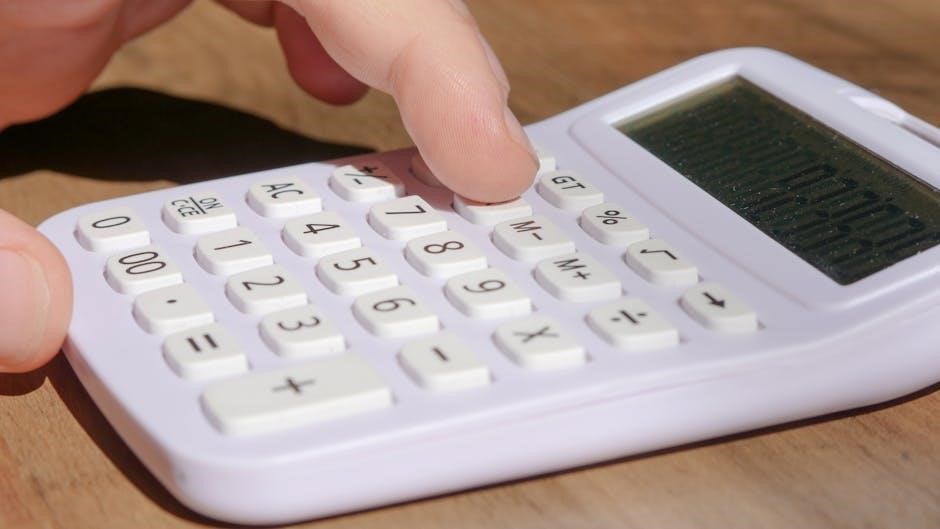
The emergence of scientific calculators marked a significant leap forward‚ extending computational abilities far beyond basic arithmetic. These devices‚ becoming indispensable in science‚ technology‚ engineering‚ and mathematics (STEM) fields‚ incorporated a wealth of advanced functions. Core to their functionality were trigonometric functions – sine‚ cosine‚ tangent – enabling calculations involving angles and triangles‚ crucial for physics and engineering.
Beyond trigonometry‚ scientific calculators offered logarithmic calculations‚ exponential functions‚ statistical analysis tools‚ and often‚ the ability to handle complex numbers. They facilitated conversions between different units of measurement and provided access to mathematical constants like pi (π) and Euler’s number (e).
This expansion of functionality empowered users to tackle increasingly complex problems‚ streamlining calculations and reducing the potential for human error. The scientific calculator became a cornerstone of modern scientific inquiry and education.
Programmable Calculators: HP and Beyond
The introduction of programmable calculators represented a paradigm shift‚ moving beyond fixed functionality to user-defined operations. Hewlett-Packard (HP) pioneered this revolution‚ releasing models that allowed users to write and store custom programs‚ effectively creating specialized calculating tools tailored to specific tasks. This capability dramatically expanded the calculator’s versatility.
Early HP programmable calculators utilized Reverse Polish Notation (RPN)‚ a unique input method that prioritized efficiency and logical order of operations. While initially a learning curve‚ RPN became a hallmark of HP’s calculators and attracted a dedicated following among engineers and scientists.
Other manufacturers followed suit‚ offering programmable calculators with varying programming languages and input methods. These devices found applications in diverse fields‚ from financial modeling and statistical analysis to control systems and data acquisition. Programmability unlocked a new level of power and flexibility‚ solidifying the calculator’s role as a sophisticated problem-solving instrument.
Graphing Calculators: Visualizing Mathematical Concepts
Graphing calculators revolutionized mathematics education and practice by enabling the visual representation of equations and functions. This capability moved beyond numerical solutions‚ allowing users to explore mathematical concepts intuitively and gain deeper understanding. Texas Instruments (TI) became a dominant force in this market‚ with models like the TI-81 and TI-83 becoming staples in classrooms worldwide.
These calculators could plot various types of graphs‚ including lines‚ curves‚ and surfaces‚ facilitating the analysis of mathematical relationships. Students could visualize the effects of changing parameters‚ identify key features like intercepts and asymptotes‚ and explore complex functions with ease.
Beyond graphing‚ these devices often incorporated advanced features like statistical analysis‚ matrix operations‚ and programming capabilities. Graphing calculators became essential tools for students in algebra‚ calculus‚ and other STEM fields‚ fostering a more interactive and visual approach to learning and problem-solving.
The 21st Century: Calculators in the Digital Age
The dawn of the 21st century witnessed a significant shift in calculator technology‚ driven by the proliferation of computers‚ smartphones‚ and the internet. Software calculators emerged as powerful alternatives‚ offering extensive functionality and accessibility through online platforms and desktop applications. These programs often surpassed the capabilities of dedicated hardware calculators‚ providing advanced mathematical tools and customizable interfaces.
Simultaneously‚ calculator applications for smartphones and tablets gained immense popularity‚ leveraging the portability and connectivity of mobile devices. These apps offered a convenient and cost-effective way to perform calculations on the go‚ often mimicking the features of physical calculators while adding new functionalities like unit conversions and equation solvers.
Looking ahead‚ the future of calculators points towards greater integration with artificial intelligence (AI) and cloud computing. AI-powered calculators could offer intelligent assistance‚ personalized learning experiences‚ and automated problem-solving‚ while cloud connectivity would enable seamless data sharing and collaboration.
Software Calculators: Online and Desktop Applications
As computing power became more accessible‚ software calculators began to flourish‚ offering a compelling alternative to physical devices. Early desktop applications‚ running on personal computers‚ provided expanded memory and processing capabilities‚ enabling complex calculations beyond the reach of even advanced handheld calculators. These programs often featured user-friendly graphical interfaces and the ability to save and load calculations.
The advent of the internet further revolutionized the landscape‚ giving rise to online calculators. Accessible through web browsers‚ these tools eliminated the need for software installation and allowed users to perform calculations from any device with an internet connection. Online calculators ranged from simple arithmetic tools to sophisticated scientific and financial calculators.
These software solutions frequently surpassed hardware limitations‚ offering features like symbolic manipulation‚ equation solving‚ and data visualization. They became invaluable tools for students‚ researchers‚ and professionals across various disciplines‚ demonstrating the power of software in extending the capabilities of calculation.
Calculator Apps for Smartphones and Tablets
The proliferation of smartphones and tablets ushered in a new era for calculators – one of ubiquitous accessibility and intuitive touch-based interfaces. Calculator apps quickly became standard pre-installed software on these devices‚ offering basic arithmetic functions alongside more advanced scientific and graphing capabilities.
These apps leveraged the unique features of mobile devices‚ such as touchscreens‚ accelerometers‚ and cameras. Some apps incorporated handwriting recognition‚ allowing users to input equations naturally. Others utilized the device’s camera to scan and solve mathematical problems directly from textbooks or worksheets.
The convenience and portability of calculator apps made them indispensable tools for students‚ professionals‚ and everyday users. A vast ecosystem of third-party apps emerged‚ offering specialized calculators for finance‚ engineering‚ statistics‚ and more. This mobile revolution democratized access to powerful calculating tools‚ placing them in the pockets of billions worldwide.
The Future of Calculators: Integration with AI and Cloud Computing
The evolution of calculators isn’t slowing down; instead‚ it’s poised for a dramatic shift fueled by artificial intelligence (AI) and cloud computing. Future calculators will likely move beyond simply performing calculations to understanding the problems themselves‚ offering step-by-step solutions and personalized learning experiences.
AI integration could enable calculators to recognize patterns‚ suggest relevant formulas‚ and even identify errors in user input. Cloud connectivity will allow for seamless data sharing‚ collaborative problem-solving‚ and access to vast databases of mathematical functions and constants. Imagine a calculator that learns your preferred methods and adapts to your skill level.
Furthermore‚ cloud-based calculators could offer advanced simulations and visualizations‚ previously limited to powerful desktop software. This convergence of AI and cloud computing promises to transform calculators from simple tools into intelligent assistants‚ empowering users with unprecedented mathematical capabilities and insights;